Block-wise schedules you set once
Every valve gets its own days, start time and run minutes. Once the schedule matches the crop stage, irrigation stops depending on who is at the farm that week.
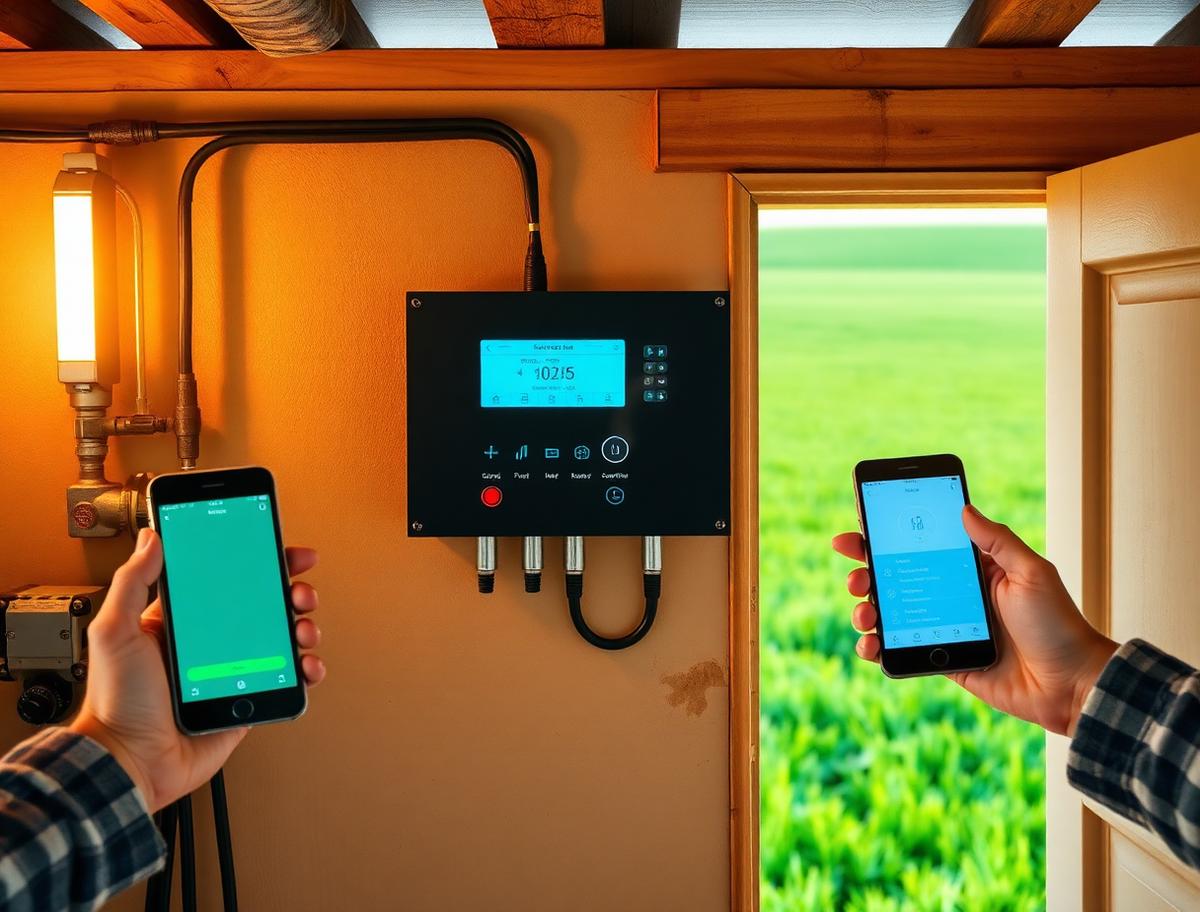
A smart irrigation controller opens and closes your drip blocks on a schedule or on a soil-moisture reading, from a panel or your phone. Ours handle 4 to 24 valve stations, log runtime and water use, and resume on their own after a power cut. Panels start at ₹5,000.
Rated 4.8/5 by 968+ farmers
₹5,000 / unit
Price from
4 – 24 valves
Stations
GSM / Wi-Fi
Connectivity
1–3 days
Install time
These are the exact sizes, capacities and materials that go into our field builds. No brochure numbers — everything here is what we have installed in Haryana and western UP.
Built from the field notes we have made on hundreds of installs across this belt.
Every valve gets its own days, start time and run minutes. Once the schedule matches the crop stage, irrigation stops depending on who is at the farm that week.
Supply in this belt drops mid-cycle. The controller picks the schedule back up when power returns and the valves fail closed in the meantime, so nobody walks to the pump house at midnight.
A probe in the root zone stops a cycle that is not needed, and a rain sensor skips irrigation after a shower. On vegetables this alone prevents the over-watering that drives root disease in the monsoon.
The controller interlocks the pump with a tank float or pressure switch. A pump that cannot run dry is a pump you are not replacing next season.
Per-block records of how long each valve ran. Useful for tuning the schedule, and useful evidence when a subsidy or contract buyer asks how the water was managed.
Every station has a physical switch. If a sensor misbehaves or the network is down, you still open the block by hand. Automation should never lock you out of your own system.
We do not quote one template. The build is matched to the crop, the season and the water you have.
Small vegetable plots and single polyhouse blocks
Scheduled irrigation with manual override and battery backup. Entry build from about ₹5,000.
Multi-block farms of 2–10 acres
Soil-moisture and rain inputs, GSM alerts, pump interlock and logging. The most common specification we install.
Large or multi-house farms and contract growers
Full sensor set, dashboard, alerts and integration with a fertigation or polyhouse panel.
These are the mistakes we have seen, and the details that decide whether a system lasts or becomes a maintenance problem.
More controller failures in this belt come from bad earthing and surges than from anything in the electronics. We check the earth pit before installing, and where it is missing we say so in writing rather than fitting a panel that will fail in the first storm.
A moisture probe sitting in a sandy patch will tell you to irrigate a clay block. Where a farm has clearly different soils we place a probe in each and program those blocks separately.
Valve cable run through open field gets cut by rotavators. We route in conduit along bunds and mark the run, because tracing a broken solenoid cable across ten acres is a whole day nobody wants.
How we run this project so the field crew is not guessing on the day.
We count the valves, pumps and sensors you want on the panel, and check incoming supply, earthing and cable routes.
Wiring diagram, station and relay sizing, enclosure layout. The panel is assembled and tested before it comes to the farm.
Panel mounting, solenoid and sensor wiring in conduit, pump interlock, and station-by-station testing.
Schedules programmed with you present, sequence printed for the pump-house wall, operator training in Hindi.
Honest exclusions so you can budget the full project, not just the headline price.
Controllers are usually approved as part of a micro-irrigation or protected-cultivation file rather than as a standalone item, under PMKSY per-drop-per-crop, MIDH or the Haryana and UP state horticulture programmes. We supply the technical layout and estimate the file needs and coordinate with the horticulture office. Confirm the current rate for your district before budgeting on it.
Short, direct answers written for how farmers search on Google.
It is a drip or sprinkler system whose valves are operated by a controller instead of by hand — on a timer, or on readings from soil-moisture, rain and tank sensors. You set the schedule once, check it from your phone, and the field gets the same irrigation whether or not you are there.
From about ₹5,000 for a small timer panel covering a couple of blocks, up to ₹1,00,000 for a fully sensored farm-wide build with logging and alerts. Most multi-block vegetable farms land somewhere in between. Station count and sensor list drive the price.
Yes. GSM or Wi-Fi units give you app control — open a block, change a schedule, or check whether the last cycle ran. Alerts come by app or SMS when a block fails to build pressure, the tank runs low or a sensor drops out.
Valves fail closed and the controller resumes its schedule when supply returns, so you do not get a flooded block or a skipped one. Battery backup keeps the clock and programme intact. Where supply is very unstable we add solar backup for the controller.
In most cases yes. Manual gate valves are replaced with solenoids, the pump starter is interlocked, and the rest of the layout stays as it is. We check your head unit on the survey visit and tell you exactly what has to change.
Four to twenty-four stations depending on the model, with more than one valve able to run per programme if your pump discharge supports it. We size the station count against your flow so you never schedule more blocks than the pump can feed.
Not to start with. Many farms run a timer schedule for the first season and add probes later — we provision the wiring for them from day one. Sensors pay off fastest on sandy soils and in the monsoon, where fixed schedules over-water.
24×7 on phone and WhatsApp. Send a photo of the panel display and most issues are diagnosed the same evening. Where hands are needed a technician comes out, same day inside Karnal district wherever we can manage it.
Other pages that cover the same decision from a different angle.
Tell us your acreage, crop and water source. We'll come out, measure, test and give you an itemised quote with the subsidy path included.