Moisture held between irrigations
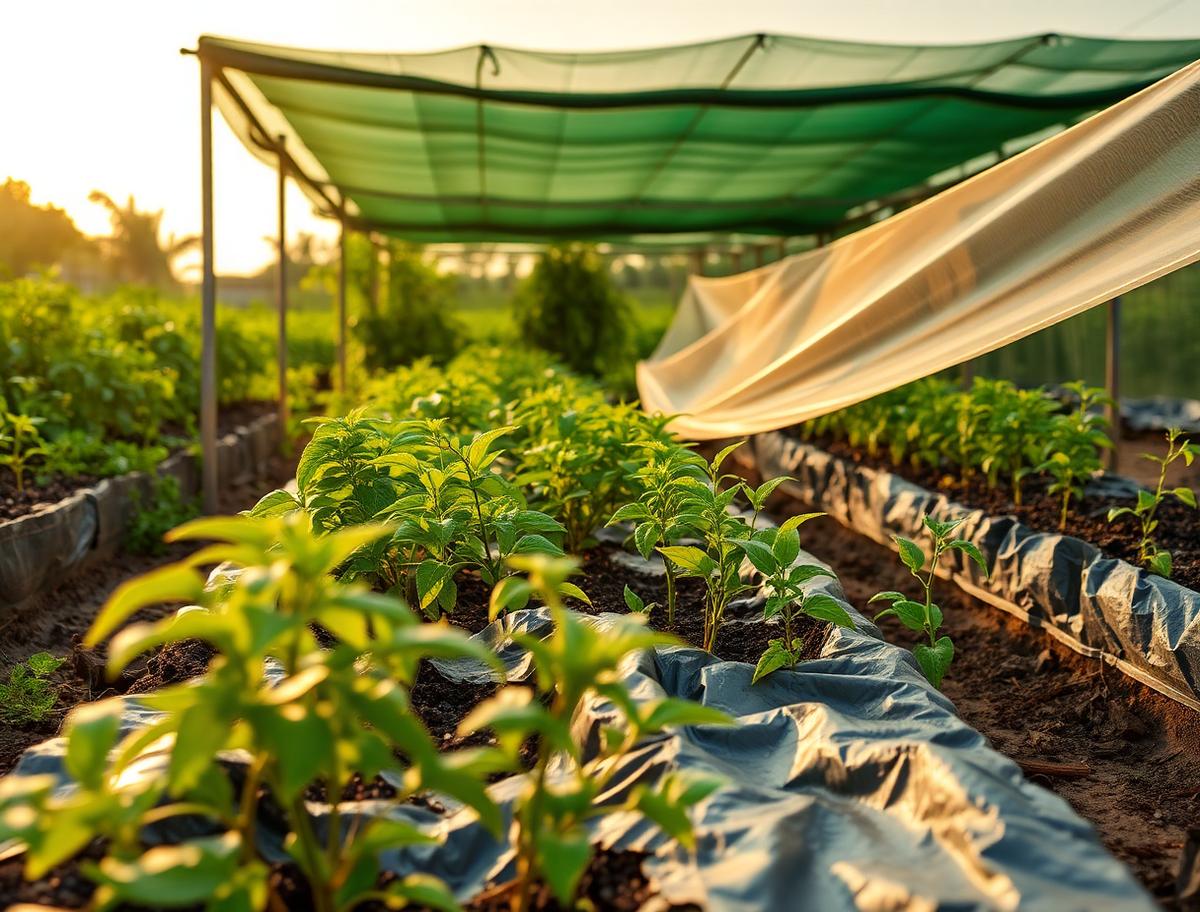
Film over a drip-irrigated bed cuts evaporation off the soil surface sharply. Through May and June that is the difference between a crop that keeps growing and one that checks every afternoon.
Silver-black mulch film holds soil moisture between irrigations and cuts weeding rounds; shade nets take the edge off May and June heat. We supply 25 and 30 micron film in 1.0–1.4 m widths and 35%, 50% and 75% nets, laid by our own crew.
Rated 4.9/5 by 1,476+ farmers
1.0 – 1.4 m
Mulch width
25 / 30 micron
Thickness
35 / 50 / 75%
Shade factors
5 acres and above
Bulk rate
These are the exact sizes, capacities and materials that go into our field builds. No brochure numbers — everything here is what we have installed in Haryana and western UP.
Built from the field notes we have made on hundreds of installs across this belt.
Film over a drip-irrigated bed cuts evaporation off the soil surface sharply. Through May and June that is the difference between a crop that keeps growing and one that checks every afternoon.
The black underside stops light reaching the bed, so weeds in the row simply do not establish. On labour cost alone mulch is usually the fastest-paying item on a vegetable farm.
The reflective upper surface keeps the root zone cooler in peak summer and disorients aphids and whitefly approaching from below. It is not a spray replacement, but it lowers early pressure.
35% for hardening and light shading, 50% for most vegetables and nursery work, 75% for shade-loving ornamentals and summer nursery. Taking too dense a net costs you yield in the cooler months.
Woven ground cover between tree rows keeps the strip clean for several seasons and lets water through to the root zone. It replaces repeated weedicide passes in kinnow and guava blocks.
Bed forming, tucking the edges and punching planting holes at the right spacing decide whether film survives the season or lifts in the first strong wind. We lay it ourselves rather than dropping rolls at your gate.
We do not quote one template. The build is matched to the crop, the season and the water you have.
Short-duration vegetables, single-season crops
Lower cost per acre, adequate for a three to four month crop cycle on formed beds.
Long-duration crops, polyhouse beds, windy sites
Tougher against handling and wind lift, holds up through a longer crop and rough field conditions.
Nursery, hardening, summer vegetables, ornamentals
UV-stabilised HDPE with stitched borders and eyelets, supplied cut to your structure size.
These are the mistakes we have seen, and the details that decide whether a system lasts or becomes a maintenance problem.
The lateral goes on the bed first, then the film over it. Growers who lay film first and drip on top lose most of the moisture benefit and cannot see a leak until the crop shows it.
In an open field around Karnal a shallow tuck lasts until the first pre-monsoon squall. Edges go into a proper furrow with soil packed over them, and the ends are anchored.
Hole size and spacing follow the crop's plant population. Too large a hole lets weeds through and dries the bed edge; too tight and transplanting damages the film.
How we run this project so the field crew is not guessing on the day.
Crop, spacing, bed geometry and season decide film width, thickness and shade factor. We take those on the survey visit.
Roll count worked from bed length and spacing, quoted with bulk rates where the area is five acres or more.
Beds formed, drip lateral placed, film laid and edges tucked, holes punched at the planting spacing.
Repair patches left with you, and a short brief on lifting, storing and disposing of film at the end of the crop.
Honest exclusions so you can budget the full project, not just the headline price.
Plastic mulching and shade nets are supported under MIDH and the Haryana and Uttar Pradesh state horticulture programmes, often on a per-hectare basis with a cap. We prepare the estimate and the bills the file needs and coordinate with the district horticulture office. The rate and area cap change by year, so confirm the current figure with them before budgeting.
Short, direct answers written for how farmers search on Google.
It covers the crop bed to hold soil moisture, suppress weeds in the row and moderate soil temperature. Over drip-irrigated beds it stretches the interval between irrigations and cuts weeding labour, which is why it usually pays back inside the first crop.
25 micron is enough for a short three to four month vegetable crop on well-formed beds. Take 30 micron for long-duration crops, polyhouse beds and windy open sites, where the film gets handled more and has to survive longer.
The black underside blocks light so weeds cannot establish; the silver top reflects heat and light, keeping the root zone cooler in summer and disturbing aphids and whitefly flying in from below. On summer vegetables that combination outperforms plain black.
35% for light shading and hardening, 50% for most vegetables and general nursery work, 75% for shade-loving ornamentals and peak-summer nursery. Denser is not better — too much shade costs yield once temperatures drop after September.
One crop cycle is the honest expectation for 25 micron; 30 micron will often carry a longer crop or a second short one if it is handled carefully at harvest. Shade nets, being UV-stabilised HDPE, last several seasons.
Both. Most growers take supply-and-lay, where our crew forms the beds, places the drip lateral, lays the film, tucks the edges and punches the planting holes. Roll-only supply is available where you have your own labour.
It should be. The lateral goes on the bed first and the film over it, so the water goes under the cover and stays there. Mulch over drip is the standard combination on every vegetable farm we set up in this belt.
Yes, from five acres and above on both film and net. Send the crop, spacing and area and we will work out the roll count and quote the bulk rate, with the horticulture subsidy shown separately if you plan to claim it.
Other pages that cover the same decision from a different angle.
Tell us your acreage, crop and water source. We'll come out, measure, test and give you an itemised quote with the subsidy path included.