Water tested before anything is sized
Sand content, iron, algae and organic load all change the filter choice. We take a sample from your source and specify from that, because a screen filter on canal water is a season away from a choked field.
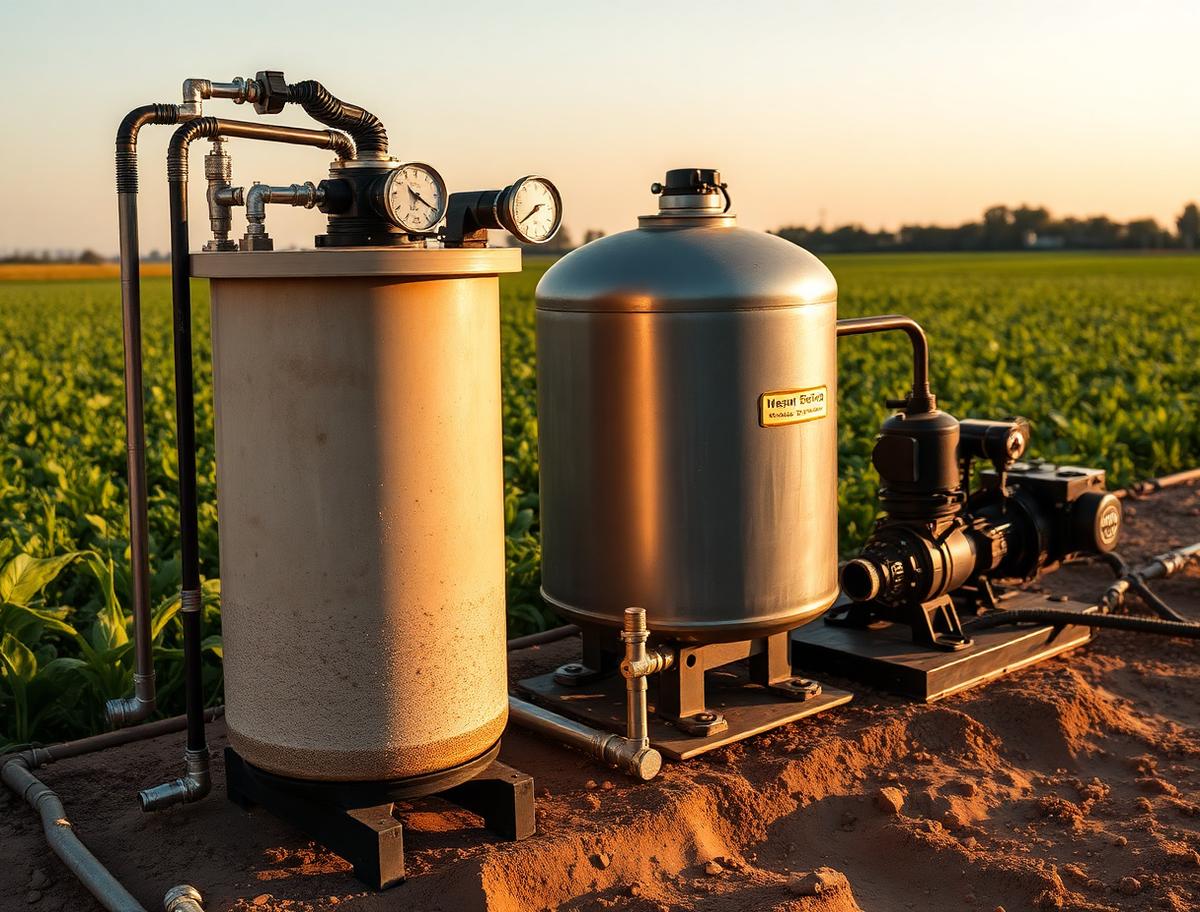
The filter decides how long your emitters last. We build sand, screen, disc and hydrocyclone batteries with back-flush and gauges at 120–130 mesh, 10–100 m³/hr, and match the pump set to your actual head and discharge rather than to a catalogue.
Rated 4.8/5 by 1,132+ farmers
120 – 130 mesh
Filtration
10 – 100 m³/hr
Capacity
Epoxy-coated MS
Body
1–2 days
Install time
These are the exact sizes, capacities and materials that go into our field builds. No brochure numbers — everything here is what we have installed in Haryana and western UP.
Built from the field notes we have made on hundreds of installs across this belt.
Sand content, iron, algae and organic load all change the filter choice. We take a sample from your source and specify from that, because a screen filter on canal water is a season away from a choked field.
A filter run at the top of its rated flow chokes fast and drops pressure across the field. We take the next size up where the price gap is small — it buys longer intervals between cleaning and a steadier discharge at the tail end.
Media filters get a flush manifold so the sand bed can be cleaned without dismantling anything. On automated farms the flush runs off the same controller as the irrigation.
The pressure difference across the filter tells you exactly when to clean it. Two cheap gauges turn maintenance from guesswork into a number your operator can read.
Where the borewell throws fine sand, a hydrocyclone in front drops most of it out before it reaches the media filter. It has no moving parts and roughly doubles the working interval of everything downstream.
We calculate total head including friction loss in the mains and select the pump against that. Oversized pumps waste power every hour they run; undersized ones never reach the design pressure at the far block.
We do not quote one template. The build is matched to the crop, the season and the water you have.
Clean borewell water, small to medium drip blocks
Compact, low cost, easy to clean by hand. Right where sediment and organic load are both low.
Canal water, ponds and any source with algae
Graded silica media removes organic load; the screen filter downstream catches carry-over. The standard for canal-fed systems.
Sandy borewells and large multi-block farms
Full three-stage head unit with back-flush and gauges, sized to the pump discharge.
These are the mistakes we have seen, and the details that decide whether a system lasts or becomes a maintenance problem.
When a farmer calls to say pressure has dropped at the tail end, the first thing we ask for is a photo of the two gauges. More often than not the differential is high and a clean plus a flush restores the field the same day.
Iron-rich borewell water leaves a rust deposit inside emitters that no screen filter catches. Where the sample shows iron we plan for aeration or an oxidation stage and build the acid-wash routine into handover.
We have replaced filter batteries wedged into a corner where nobody could open the lid. Leave clear space on the flush side and mount the gauges at eye level; maintenance that is easy actually gets done.
How we run this project so the field crew is not guessing on the day.
Source water tested for sediment, iron and organic load; pump discharge and pressure measured at site.
Filter type, stage count and capacity selected against that data, with the pump specified on total head including friction loss.
Head unit assembled on its platform, valves, gauges and flush manifold fitted, pump aligned and wired.
Full run, differential pressure recorded as the clean baseline, operator shown the flush routine and cleaning interval.
Honest exclusions so you can budget the full project, not just the headline price.
Filtration and pumping are normally included in the micro-irrigation estimate under PMKSY per-drop-per-crop and in protected-cultivation files under MIDH or NHB. We itemise the head unit separately in the estimate so the horticulture office can see exactly what is being claimed, and prepare the supporting documents. Rates are revised each year, so confirm with the district office.
Short, direct answers written for how farmers search on Google.
It depends on the water. Clean borewell water is fine on a screen or disc filter. Canal water, pond water or anything with algae needs a sand media filter with a screen downstream. Sandy borewells want a hydrocyclone in front. We test the source before specifying.
120 to 130 mesh is the working range for standard drip emitters. Finer than that and the filter chokes constantly; coarser and particles reach the dripper. Where emitters are very small we go finer and increase the filter area to compensate.
By pressure differential, not by calendar. Note the difference between the inlet and outlet gauge when the filter is clean, and clean it again when that gap grows noticeably. On silty water that can be weekly; on clean borewell water, monthly.
It spins sand and heavy grit out of the water before it reaches the main filter, using no moving parts and no screens. It is the right first stage on borewells that throw fine sand, and it extends the cleaning interval of everything downstream.
Total head is the static lift plus friction loss through the mains, filters and laterals, and discharge is the flow the largest block needs at operating pressure. We measure both at site. Guessing gives you either a wasted power bill or a field that never reaches pressure.
Yes, and it is one of the most worthwhile retrofits we do. The battery goes in at the head unit with a flush line and gauges. Where emitters are already fouled we run an acid wash first so you start from a clean baseline.
The epoxy-coated MS body lasts many seasons with the coating intact. Media is topped up or replaced periodically, and screens and discs are consumables. Keeping the flush routine means the vessel does not sit full of packed silt through the off-season.
Yes — phone and WhatsApp support 24×7, and site visits for media changes, pump issues and acid washes. Spares for the units we install are held in Karnal so a common part does not become a week of downtime.
Other pages that cover the same decision from a different angle.
Tell us your acreage, crop and water source. We'll come out, measure, test and give you an itemised quote with the subsidy path included.