Skip to content
Nutrition delivery

Fertigation System and dosing units

Fertigation means feeding soluble fertiliser through the drip line so nutrition reaches the root zone with the water. Our head units use a venturi injector for smaller plots or an electric dosing pump where accuracy matters, with 2–4 channels, EC/pH control and ±2% dosing accuracy.

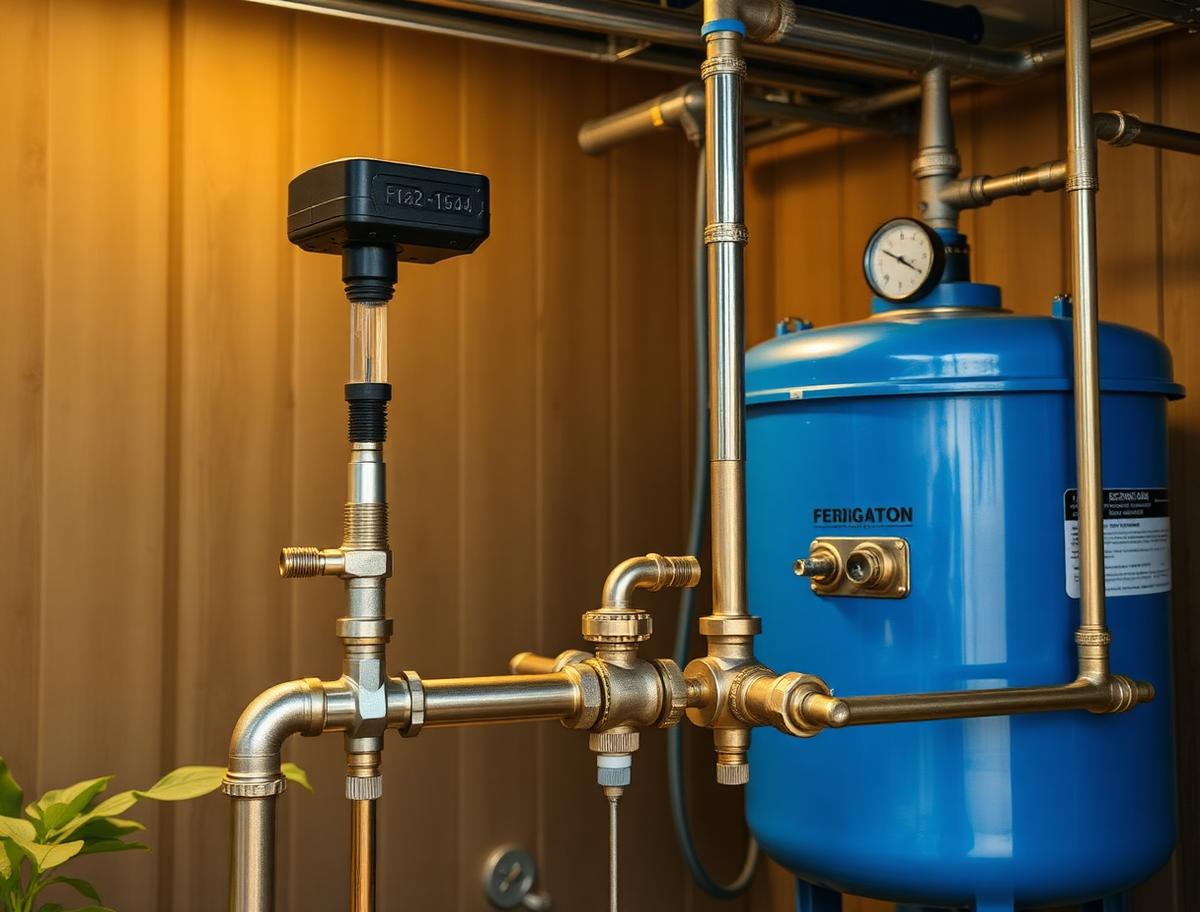
Fertigation head unit with venturi injector, dosing tank, pressure gauges and manifold valves in a farm pump house

40 – 400 LPH

Injection rate

±2%

Dosing accuracy

2 – 4 (A / B / acid)

Channels

1–2 days

Commissioning

Technical specifications

What you get in this system

These are the exact sizes, capacities and materials that go into our field builds. No brochure numbers — everything here is what we have installed in Haryana and western UP.

Injection method
Venturi injector or electric dosing pump
Injection rate
40 – 400 LPH
Dosing accuracy
±2% on pump-based units
Channels
2 to 4 (stock A, stock B, acid)
Control
Manual, timer, or EC/pH set-point with alarms
Tanks
200 – 1000 litre HDPE, with agitation option
Materials
Corrosion-resistant PP / PVDF wetted parts
Filtration ahead of injection
Screen or disc, 120–130 mesh
Fits
New or existing drip head units
Power
230 V AC single phase (pump-based units)
Why this matters

What this system does on your farm

Built from the field notes we have made on hundreds of installs across this belt.

Same mix every day, not operator judgement

A dosing pump holds the injection rate you set regardless of who opened the valve that morning. On EC-controlled units the panel corrects itself as the stock tank concentration drifts, so the crop gets a steady feed through the whole cycle.

Venturi where the plot is small

For a half-acre vegetable block a venturi injector on a bypass loop is the honest recommendation. It has no moving parts, costs a fraction of a dosing pump, and does the job as long as somebody watches the pressure differential.

Acid channel for hard water

Water in much of this belt is alkaline, and calcium will precipitate inside the emitters when phosphates go through it. A third channel dosing acid holds pH in range and protects the drip line you just paid for.

EC and pH probes with alarm set-points

The panel alarms before a mistake becomes crop damage — stock tank empty, EC above range, pH out of band. On high-value polyhouse crops that alarm has saved growers more than the unit cost.

Retrofits onto your existing head unit

We tap into the existing manifold, add the bypass, non-return valve and filter, and mount the tanks on a stand. Nothing about the drip layout has to change.

Schedules written for your crop

We set the injection window and frequency for the crop you grow, and leave a printed weekly schedule at the pump house. Capsicum under polyhouse and open-field onion do not want the same programme.

Options

Which size is right for your crop

We do not quote one template. The build is matched to the crop, the season and the water you have.

Venturi injector unit

Up to about an acre, single crop, budget builds

Bypass loop, valves, non-return and a 200 litre tank. Simple, robust, needs manual pressure setting.

Electric dosing pump, 2 channel

1–2 acres of vegetables or a one-acre polyhouse

Stock A and B tanks, timer control, ±2% accuracy. The usual choice once nutrition matters to price.

EC/pH controlled, 3–4 channel

Polyhouse floriculture, exotic vegetables, nursery

Probes, acid channel, alarms and logging. Integrates with a polyhouse automation panel for unattended running.

Field notes

What we have learned on real farms

These are the mistakes we have seen, and the details that decide whether a system lasts or becomes a maintenance problem.

Filter before the injector, always

Fertiliser dust and undissolved granules will find the emitters if there is no filter between the injection point and the field. We put a disc filter downstream of injection on every unit we build — it is a small part that prevents a full acid-wash job later.

Dissolve properly or don't bother

The most common complaint we get is uneven feeding, and nine times out of ten the stock tank had undissolved fertiliser at the bottom. An agitator, or simply the discipline of stirring before the cycle, fixes it.

Flush the line after every dose

Ending the cycle with clear water for a few minutes pushes the fertiliser out of the laterals. Skip it and you are growing algae inside your own pipe through the warm months.

Process

From survey to handover

How we run this project so the field crew is not guessing on the day.

01

Water test and crop plan

We check EC, pH and hardness of your source water, and take the crop and area so the channel count and injection rate are right.

02

Unit selection and quote

Venturi or dosing pump, tank sizes, whether probes are worth it. Quoted as line items so you can see what each part does.

03

Installation on the head unit

Bypass, non-return, filter and tank stand fitted to your existing manifold, wired and pressure tested.

04

Calibration and training

Injection rate calibrated with a measuring jar, weekly schedule printed for the pump house wall, operator trained in Hindi.

What is included

  • Source water test for EC, pH and hardness
  • Injector or dosing pump with valves and non-return
  • Stock tanks and stand, with agitation where specified
  • Downstream filtration and pressure gauges
  • Installation, calibration and pressure testing
  • Crop-wise dosing schedule and operator training

Not included

Honest exclusions so you can budget the full project, not just the headline price.

  • Soluble fertiliser and acid consumables
  • Electrical supply point and earthing for pump-based units
  • Civil platform or pump-house shed
  • Drip system itself, where not already installed
  • Cloud logging subscription on automated builds

Subsidy and government scheme support

Fertigation equipment is generally taken up along with the micro-irrigation file under PMKSY per-drop-per-crop, and under MIDH or NHB where it forms part of a protected-cultivation project. We prepare the technical layout, the estimate and the supporting documents, and coordinate with the district horticulture office. Confirm the current assistance rate with the department, as it is revised each year.

FAQ

Common questions

Short, direct answers written for how farmers search on Google.

What is fertigation in agriculture?

Fertigation is applying soluble fertiliser through the irrigation system so nutrition arrives at the root zone with the water. Because the feed goes exactly where the roots are and in small, frequent doses, uptake is far higher than broadcasting granules and far less fertiliser is wasted.

Venturi injector or dosing pump — which one do I need?

Venturi for smaller plots and simple crops: no moving parts, low cost, but the rate shifts with pressure. Dosing pump where the rate has to be repeatable — polyhouse crops, nursery, anything sold on quality. If EC has to be held in a band, take the pump with probes.

Can fertigation be added to an existing drip system?

Yes. We tap the existing head unit with a bypass, non-return valve and downstream filter and mount the tanks alongside. The field layout does not change. Most retrofits are done in a day, two if probes and a panel are included.

Which fertilisers can be used?

Fully water-soluble grades — urea, potassium nitrate, MAP, calcium nitrate, NPK blends and micronutrient chelates. Calcium and phosphate go in separate stock tanks so they do not react and precipitate. Never put a suspension or a non-soluble grade through the line.

Will fertigation block my drippers?

Not when the unit is built correctly: filtration after the injection point, separate tanks for incompatible salts, an acid channel on hard water, and a clear-water flush at the end of each cycle. Blockages come from skipping those four things, not from fertigation itself.

How accurate is the dosing?

Around ±2% on our electric dosing pump units, and the EC-controlled builds correct themselves as the stock tank changes. A venturi is less precise and moves with line pressure, which is fine for field crops but not for a polyhouse rose or gerbera block.

How much fertiliser does it save?

Growers moving from broadcast to fertigation usually cut fertiliser use meaningfully while getting better uniformity, because the feed is placed at the root zone rather than across the field. The bigger gain is usually crop uniformity and grade, not the fertiliser bill alone.

Do you train the operator?

Yes. Calibration with a measuring jar, tank mixing order, what the alarms mean, and the weekly schedule printed and stuck on the pump-house wall — in Hindi. Support afterwards is on phone and WhatsApp, 24×7.

Get a site-specific quote

Tell us your acreage, crop and water source. We'll come out, measure, test and give you an itemised quote with the subsidy path included.