Skip to content
Micro irrigation

Drip Irrigation System designed on your pump reading

A drip irrigation system delivers water drop by drop at the root zone through laterals and emitters, cutting water use by roughly half against flood. We size the lateral, emitter spacing and filter after reading the discharge at your pump, then install and commission block by block.

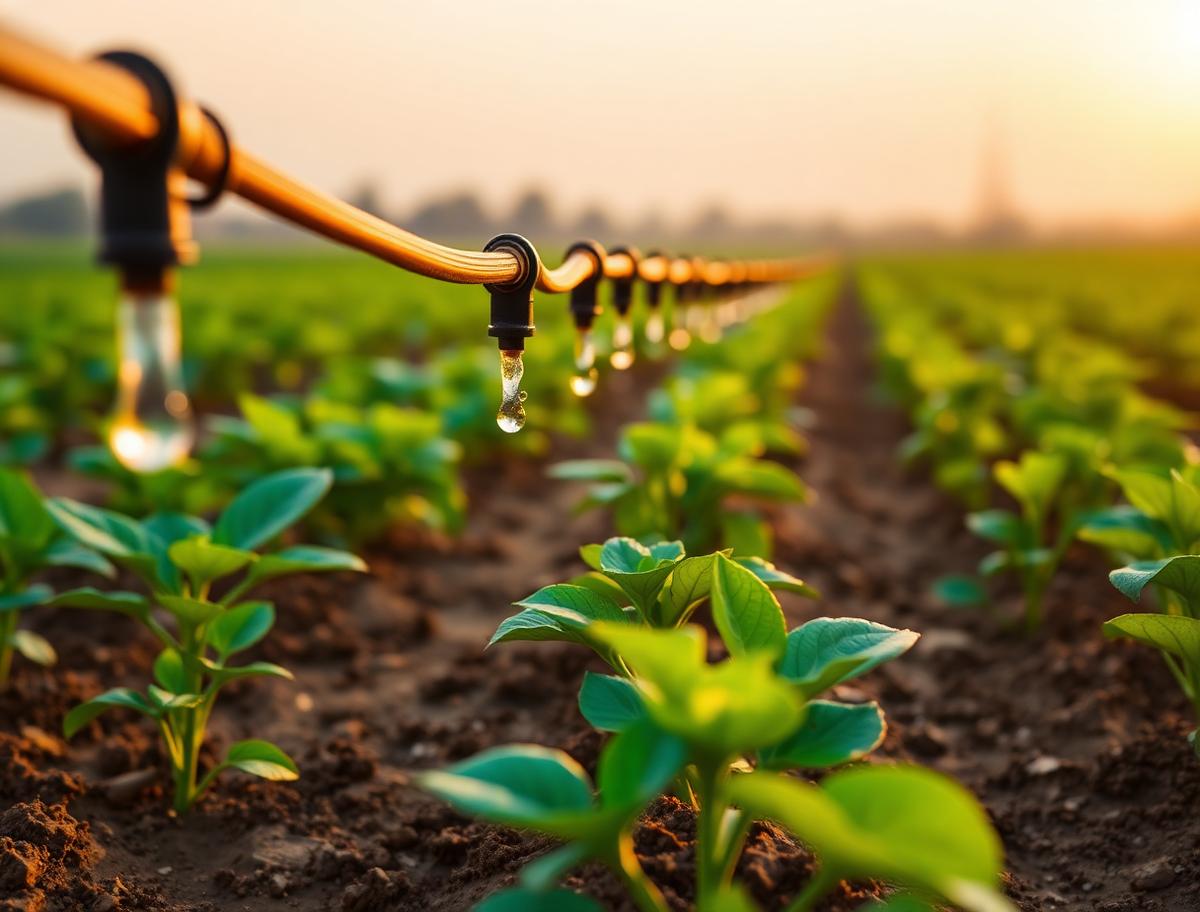
Inline drip irrigation laterals emitting water at the root zone of young vegetable rows at golden hour

40–60%

Water saved

12 / 16 / 20 mm

Laterals

5 years on pipe

Warranty

3–7 days / acre

Install time

Technical specifications

What you get in this system

These are the exact sizes, capacities and materials that go into our field builds. No brochure numbers — everything here is what we have installed in Haryana and western UP.

Lateral diameter
12, 16 and 20 mm
Dripper type
Inline and online, PC and non-PC
Discharge
2, 4 and 8 LPH
Emitter spacing
30, 40 and 50 cm
Operating pressure
0.8 – 1.2 kg/cm²
Pipe grade
ISI-grade, UV-stabilised LLDPE
Mainline / submain
PVC 63–110 mm as per discharge
Filtration
Screen, disc or sand, 120–130 mesh
Suitable crops
Vegetables, orchards, sugarcane, cotton, polyhouse crops
Service
Survey, design, supply, installation, commissioning
Why this matters

What this system does on your farm

Built from the field notes we have made on hundreds of installs across this belt.

Layout comes after the flow reading

We measure discharge and pressure at your pump before drawing anything. Lateral length, submain size and how many blocks you can run at once all fall out of that number. Buying pipe first is how farms end up with a tail end that never wets.

PC emitters where the field has slope

On undulating land a normal dripper gives more water at the low end. Pressure-compensating emitters hold the same discharge from first plant to last, which matters most in orchards and long sugarcane runs.

Filtration sized for your water, not the brochure

Borewell water around Karnal and Shamli carries iron and fine silt. We size the filter generously and add a back-flush arrangement, because a choked filter is the single most common reason a drip system stops performing in year two.

Fertigation ready from day one

The head unit is built with a venturi port and valves so a dosing unit can be added later without cutting the manifold apart. Most growers add fertigation within the first two seasons once they see the water saving.

Block-wise valves you can actually operate

Each block gets its own valve and gauge at working height. The operator can see pressure per block, which turns a vague 'system is weak' complaint into a five-minute fix.

Flushing and acid-wash schedule handed over

We leave a written flushing routine and show your operator the acid wash for emitter clogging. Systems that get flushed monthly are still running at rated discharge after five seasons.

Options

Which size is right for your crop

We do not quote one template. The build is matched to the crop, the season and the water you have.

Vegetable crop drip

Tomato, chilli, capsicum, onion, gourds on raised beds

16 mm inline lateral at 30–40 cm spacing, 2 LPH emitters, screen or disc filter. Pairs well with silver-black mulch.

Orchard and wide-spacing drip

Mango, guava, kinnow, poplar and other tree crops

16/20 mm lateral with online PC drippers around each tree, 4–8 LPH, air-release valves on long mains.

Sugarcane and cotton drip

Paired-row sugarcane and long field runs

Subsurface or surface inline at wider spacing, sand filter where canal water is used, designed for large block sizes.

Field notes

What we have learned on real farms

These are the mistakes we have seen, and the details that decide whether a system lasts or becomes a maintenance problem.

Lateral spacing is where most farms lose yield

We are regularly called to fields where laterals were run one per two beds to save money. The outer rows never get a proper wetting front and the crop is visibly uneven by flowering. Spacing follows bed geometry, not the budget.

Canal water needs a sand filter, full stop

On a sugarcane block in Shamli the grower ran canal water through a screen filter alone. Within one season a third of the emitters were choked with algae and silt. Sand filter plus screen would have cost a fraction of the re-laying job.

Rats and rolling up at harvest

Laterals left in the field after harvest get chewed and cracked. We show the crew how to roll and store them, and where field rodents are heavy we recommend heavier-wall lateral in the first quote instead of arguing about it later.

Process

From survey to handover

How we run this project so the field crew is not guessing on the day.

01

Survey and flow test

Field measurement, slope check, pump discharge and pressure reading, and a water sample where the source looks doubtful.

02

Design and itemised quote

Block layout, lateral and submain sizing, filter selection, and a line-item quote with the subsidy path shown separately.

03

Installation

Head unit assembly, mainline and submain laying, lateral rollout, emitter checking and pressure testing block by block.

04

Commissioning and training

Full-system run, discharge verified at the tail end, operator trained in Hindi on flushing, filter cleaning and valve operation.

What is included

  • Field survey, pump flow reading and system design
  • Laterals, drippers, submain, mainline fittings and valves
  • Filtration unit with back-flush arrangement and gauges
  • Complete installation, pressure testing and commissioning
  • Operator training and a written flushing schedule
  • 5-year warranty on pipe, with service support on call

Not included

Honest exclusions so you can budget the full project, not just the headline price.

  • Pump set and borewell work, unless quoted with the system
  • Electrical connection, starter panel and earthing
  • Civil work for the pump house or filter platform
  • Fertigation dosing unit, quoted separately
  • Mulch film and shade net, quoted separately

Subsidy and government scheme support

Drip is covered under PMKSY per-drop-per-crop, with assistance handled through the Haryana and Uttar Pradesh horticulture departments. We prepare the layout, the itemised estimate and the technical documents the file needs, register the work where required and coordinate with the district horticulture office. Rates and the small/marginal farmer category change year to year, so confirm the current figure with the department before you budget on it.

FAQ

Common questions

Short, direct answers written for how farmers search on Google.

What does a drip irrigation system cost per acre?

It depends on crop spacing more than anything else. Closely spaced vegetables need far more lateral per acre than an orchard, so the same acre can differ by several times. We quote after the survey and flow reading, itemised, with the subsidy amount shown separately so you see the real out-of-pocket figure.

How much water does drip irrigation save?

Typically 40 to 60 percent against flood irrigation, because water goes to the root zone instead of the whole field surface. Growers who add mulch film on top of drip usually save more again, since evaporation off the bed drops sharply through May and June.

Which drip lateral size should I use?

16 mm inline is the workhorse for vegetables and most field crops. 12 mm suits short runs and polyhouse beds; 20 mm is used for long runs and orchards where friction loss over distance would otherwise starve the tail end. Run length and discharge decide it, not preference.

What is the difference between inline and online drippers?

Inline drippers are moulded inside the pipe at fixed spacing, which suits closely spaced crops. Online drippers are punched into a plain lateral wherever you need them, which suits trees and irregular spacing. Both are available in pressure-compensating versions for sloping land.

How long does a drip system last?

Good UV-stabilised pipe lasts around five to seven seasons on surface installation, longer where laterals are rolled and stored after harvest. Filters, valves and gauges outlast the pipe. The pipe carries a 5-year warranty against manufacturing defect.

Why do drippers get blocked and how is it fixed?

Silt, algae and calcium or iron deposits. Prevention is correct filtration plus monthly flushing of the laterals. For deposits already formed we run an acid wash, which restores most emitters. We train your operator to do both instead of calling us for it.

Can drip be used for sugarcane and cotton?

Yes, and it is one of the biggest water savings available in this belt. Paired-row planting with the lateral between the rows works well for sugarcane. Canal water needs a sand filter ahead of the screen filter, otherwise algae will close the emitters within a season.

How long does installation take?

Three to seven days per acre depending on crop and terrain, once material reaches site. Head unit and mainline take the first day or two; lateral rollout and testing take the rest. We do not leave until discharge has been checked at the far end of each block.

Get a site-specific quote

Tell us your acreage, crop and water source. We'll come out, measure, test and give you an itemised quote with the subsidy path included.